AI for Construction Submittal Reviews: Faster Approvals, Better Compliance, and Smarter Coordination

Summarize this post:

Instantly extract the key takeaways from this article using AI.
Construction projects generate a huge amount of information. Submittals sit at the center of that process. They connect design intent, product data, vendor information, shop drawings, and field execution.
Yet the review process often feels slow.
A project engineer may spend hours reading specification sections. A reviewer may compare hundreds of pages before making a decision. A missing document can trigger another review cycle. A simple oversight leads to delays and rework.
That is why firms are considering AI.
A new generation of AI tools is changing how project teams process submittals throughout a project. Instead of relying on manual document checks, teams can use AI to identify requirements and review compliance to keep stakeholders aligned.
The shift is in the early stages, but the possibility is hard to ignore.
According to research from Autodesk and FMI, poor data and communication issues continue to cost the construction industry billions each year.
Also, project teams spend a large portion of their workday searching for information hidden inside project files.
AI aims to reduce that burden.
Teams spend more time searching than many people expect. A study from PlanGrid and FMI suggests that construction professionals spend 35 percent of their time on tasks that do not directly support field work.
Submittal reviews require attention to detail.
Reviewers must verify products, materials, dimensions, standards, certifications, and supporting documents. They often compare submittals against drawings, specifications, and contract requirements.
That process can take days.
iFieldSmart is developing AI-powered submittal review capabilities.
Instead of manually reading pages, teams can use AI to analyze submitted documents and compare them against project needs. More so, the system can identify missing information, highlight compliance gaps, and point out areas that need attention.
This approach gives reviewers a head start.
Rather than spending hours locating one information, they can focus on decisions and technical judgment.
The result is a review process that moves faster while maintaining quality.
As projects becomes more complex, reducing review time becomes more important. Delays in approvals can affect procurement schedules and field activities.
Faster reviews help keep projects moving.
Every project starts with one basic question.
What submittals does the project require?
Finding that answer often means reading specification books page by page. On large projects, those documents can stretch into thousands of pages.
Manual review takes time. It also increases the chance of missing requirements.
iFieldSmart AI helps solve that problem.
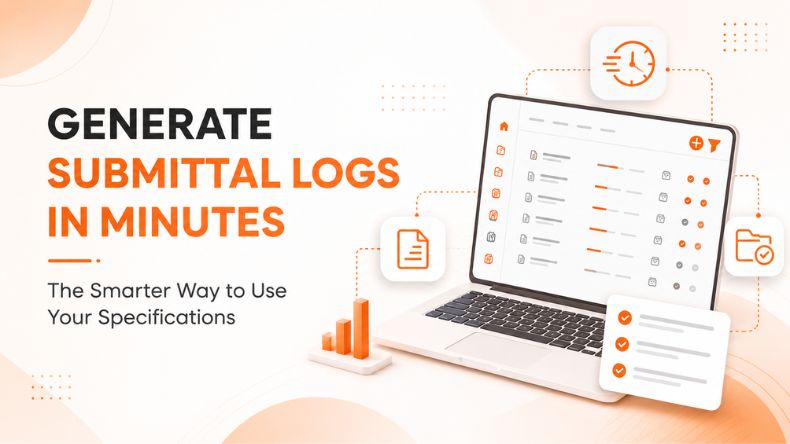
The Submittal Log Generator is designed to help scan project specifications and identify required submittals automatically. It extracts requirements from specification sections and organizes them into structured logs.
This gives teams a clear picture of what needs to be submitted before construction begins.
Project managers gain better visibility.
Trade partners understand their responsibilities sooner.
Procurement teams can identify long lead items earlier.
Strong construction submittal management starts with complete information. AI helps establish that foundation from day one.
The benefit extends beyond speed.
A well organized log supports planning, scheduling, and coordination throughout the project lifecycle.
Compliance checks often involve multiple sources.
A reviewer may need to compare a submittal against specifications, drawings, standards, codes, and project notes.
Teams often find it difficult to review requirements when information sits across hundreds of files. AI submittal compliance review helps bring those pieces together.
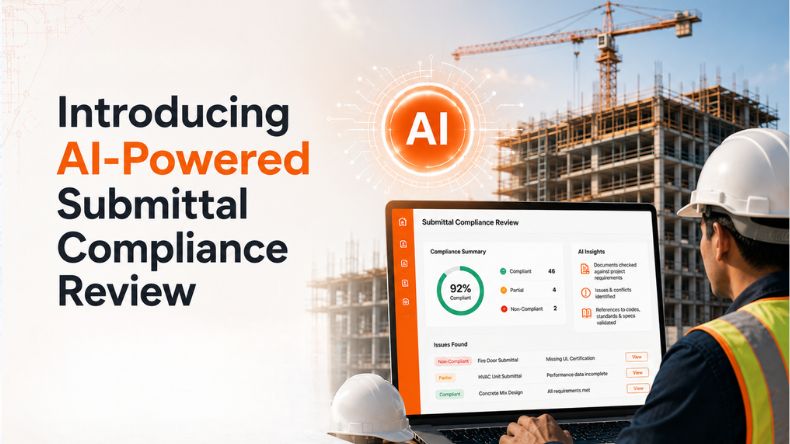
The technology examines submitted documents and checks them against project requirements. It identifies deficiencies and missing items along with potential conflicts.
It can even generate structured reports that show findings in a clear format.
This level of consistency helps reduce review variations between team members.
Accuracy matters because errors become expensive once materials reach the field.
A product that does not meet specifications can trigger delays, replacement costs, and additional reviews.
By identifying issues earlier, AI helps reduce downstream risk.
The goal is not to replace technical experts.
The goal is to help them review information faster and with greater confidence.
Poor project data can carry a high cost. In 2020, inaccurate and inefficient data practices cost the worldwide construction sector around $1.85 trillion, according to a study by Autodesk and FMI Corporation.
Picture a large hospital project.
The project team gets more than a hundred pages of specifications, and several trade partners will work on the job. Everyone needs clear submittal requirements from the start.
In many projects, an engineer spends days reading specification sections. They search for product data, shop drawings, samples, test reports, and closeout records. Then the team enters everything into spreadsheets and assigns responsibility to each trade.
The work takes time. Now, picture a different approach.
iFieldSmart AI is building capabilities that would allow teams to generate submittal logs automatically from specifications. It gathers product data requirements, shop drawings, samples, certifications, testing needs, and closeout documents.
The system then sorts everything into a clear submittal log. It also groups requirements by CSI division.
Project managers can review the results right away. They can assign tasks, spot long lead items, and plan ahead much earlier.
The difference feels simple. Yet it can save many hours at the start of a project.
Result
Now consider a mechanical equipment package.
A contractor submits product data sheets, shop drawings, and other deliverables. The review team must check every document against project requirements.
That means opening multiple files and jumping between drawings, and specifications.
With iFieldSmart AI tools, the team can upload the submittal package for review.
The system checks the submitted information against project specifications, drawings, codes, and standards. It looks for missing documents. It flags compliance issues. It points out possible conflicts that need attention.
The system then delivers a report that highlights key findings.
When questions come up, the team can search drawings and specifications directly. They can find answers without digging through hundreds of pages.
Project teams use Email AI to record review comments. Meeting AI captures discussion points and action items from coordination meetings.
As a result, reviewers spend less time searching for information. They spend more time reviewing technical details and making decisions.
Result
These examples show where AI fits into the submittal process. It helps teams move from planning to review with less manual work. As project files continue to grow, that support becomes more valuable.
Keeping track of submittals can become a project of its own.
Large jobs may involve hundreds or even thousands of submissions.
Some await review. Some require revisions. Others sit with vendors or consultants.
Without visibility, delays can be ignored until they impact the timeline.
Teams can track construction submittals more easily when they organize information from the start. AI-generated logs provide a structured framework for monitoring submissions and review status.
Teams can clearly see which submittals they have submitted and which ones still need action. Project leaders can identify bottlenecks earlier.
Trade contractors gain clearer expectations. Owners receive better insight into project progress.
Visibility often leads to better decision making.
When everyone works from the same information, coordination becomes simpler.
One challenge appears in almost every project.
Finding answers.
A reviewer may need to confirm a specification requirement. Another team member may need information from a drawing sheet. Someone else may need clarification from a note buried deep inside a document package.
Finding those answers manually takes time.
AI for construction submittals helps reduce that effort.
Construction drawing and specification question answering tools allow users to ask direct questions about project documents.
Instead of searching through hundreds of pages, teams can receive answers linked to source documents.
This improves confidence in decision making. It also helps reviewers verify requirements while evaluating submittals.
When document intelligence works alongside submittal reviews, project teams spend less time searching and more time solving problems.
That shift may seem small.
Yet on large projects, those saved minutes add up quickly.
Many compliance issues begin with communication gaps.
An email gets overlooked.
A meeting decision is forgotten. A clarification never reaches the right person.
These small issues often grow into larger problems. Construction compliance management depends on accurate information sharing.
That is why communication tools are becoming part of the AI conversation.
Construction Email AI helps teams draft and organize project correspondence. Important discussions become easier to track. Meeting AI helps capture conversations, meeting notes, action items, and follow ups.
The value becomes clear over time.
Project knowledge stays accessible.
Decisions remain documented.
Teams spend less time searching through email chains and meeting records.
Good compliance depends on good communication.
AI helps support both.
Construction projects involve many stakeholders.
Each group depends on timely information. A delay in one area can affect everyone else.
AI construction coordination helps keep information connected across project teams.
Submittal requirements, compliance findings, drawing references, emails, and meeting discussions can support a more informed workflow.
When information moves more freely, coordination improves.
Review cycles become shorter. Decisions happen with greater confidence.
This is important as projects continue to grow in size and complexity.
Thus, teams need better ways to manage information. AI offers one possible path forward.
Construction has never lacked data.
The challenge has always been finding the right information when required.
Submittals illustrate that challenge perfectly. Requirements sit inside specifications.
Answers hide in drawings. Decisions live in emails and meeting notes.
Teams spend valuable time connecting those pieces. iFieldSmart AI is helping bring them together.
The next phase of construction technology will focus less on generating more data and more on making existing information easier.
That shift could lead to faster approvals and stronger compliance along with better coordination across projects. The opportunity is significant.
Review cycles may become shorter.
Documentation may become more complete.
Teams may spend less time searching and more time building.
As AI capabilities continue to mature, construction submittals could become one of the first project workflows to see measurable gains from intelligent document review.
The future is not about removing people from the process. It is about giving them better tools to work with.
And that future appears closer than many expect.
What are AI construction submittal reviews?
AI construction submittal reviews use artificial intelligence to evaluate submittal packages against project requirements, drawings, specifications, standards, and supporting documents.
How does AI help with construction submittal management?
AI can scan specification books, identify required submittals, and organize them into structured logs. This helps teams plan reviews and track submissions more effectively.
What is an AI submittal compliance review?
An AI submittal compliance review checks submitted documents against project requirements and highlights missing information, deficiencies, and compliance issues.
Can AI improve construction submittal tracking?
Yes. AI helps organize submittal data, making it easier to monitor submission status, review progress, and outstanding actions.
How does AI for construction submittals work with drawings and specifications?
AI can analyze project drawings and specifications and provide source based answers to questions. This helps reviewers locate information faster.
Why is construction compliance management important?
Compliance management helps ensure that products, materials, and documentation meet project requirements before installation. Early detection of issues reduces project risk.
How does AI construction coordination help project teams?
AI supports coordination by connecting information across submittals, drawings, and other aspects. This helps teams make faster and better informed decisions.
Explore more insights on similar topics
 SUBMITTAL MANAGEMENT
Building a commercial property or major infrastructure asset requires managing immense volumes of highly intricate...
 SUBMITTAL MANAGEMENT
Construction teams often spend a substantial amount of time on submittal reviews. Every product data...
 SUBMITTAL MANAGEMENT
Creating submittal logs from spec books often looks simple at first. Open the specification. Scan...