
Construction Change Management AI Helps Teams Stay Ahead of Drawing Changes

Summarize this post:
Instantly extract the key takeaways from this article using AI.
Construction drawings never stay the same for long.
One bulletin arrives on Monday morning. Another revised sheet lands two days later. Then someone shifts the duct routing after coordination review. A fresh RFI changes the wall layouts again before the week ends.
And suddenly, the team asks the same question again.
What changed this time?
That question slows projects down every day.
Most construction teams still compare revisions manually. They overlay PDFs. Open the sheets side by side. Scan revision clouds. Review notes line by line. Then they build change logs manually and repeat the same process again after the next update arrives.
This workflow drains time quickly.
Worse, teams still miss changes.
A hidden revision may affect procurement. A moving wall may impact fabrication. One overlooked note may force field crews to redo installed work later.
And honestly, those mistakes spread fast on large projects.
Construction jobs move too quickly now for slow revision review.
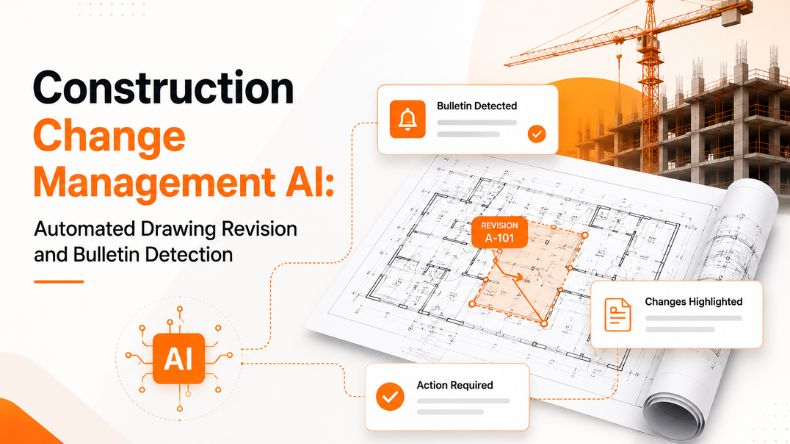
That is why more contractors use Construction Change Management AI as a smart revision review skill that helps teams compare drawings, detect updates, and review project impacts automatically.
Platforms like iFieldSmart AI help teams review revisions visually instead of hunting for changes manually across hundreds of sheets.
The process feels cleaner now.
Upload the revised drawings. Review detected changes. Understand impacts faster.
Construction projects keep changing throughout the project lifecycle.
The IFC rarely stays untouched from start to finish. During execution, teams constantly receive:
Every update introduces another review cycle.
Someone must understand exactly what changed between versions.
That sounds manageable on smaller jobs. Large projects become much harder. Hundreds of sheets move through coordination constantly. Teams lose hours reviewing revisions manually.
Let Change Management AI handle the comparison work automatically.
Construction Change Management AI helps construction teams compare revised drawing sets against earlier versions automatically.
The workflow stays simple.
First, teams upload the original IFC drawing set. That set becomes the project baseline.
Next, teams upload revised bulletin drawings, updated sheets, or directive sets whenever new revisions arrive.
Then the AI starts revision analysis automatically.
The system can:
This process removes the slow manual overlay workflow many teams still rely on today.
And honestly, that saves more frustration than most people expect.
Manual comparison work becomes exhausting after a while.
Project engineers stare at screens for hours. Coordination teams compare clouds repeatedly. BIM teams review sheets one by one. Estimators rebuild logs manually.
People naturally miss things.
AI helps reduce that problem.
The platform automatically identifies:
Changed areas appear clouded and highlighted directly on the drawing.
This gives teams clearer visibility into revisions immediately.
Construction schedules move fast.
Nobody wants teams stuck reviewing PDFs half the day while field crews wait for updated answers.
AI shortens that review cycle.
Instead of:
Open sheets → overlay manually → compare → identify → document
Teams now follow a much simpler workflow:
Upload → analyze → review visually.
This shift saves time across the project.
And honestly, the workflow feels less chaotic, too.
Construction Drawing Revisions affect nearly every phase of the project.
One small revision may impact:
One unnoticed update can quickly spread problems across several trades.
This is why revision tracking matters so much during construction.
Use Construction Drawing Revisions to organize changes clearly.
AI-based revision workflows help teams review updates visually instead of relying only on manual comparison.
The system builds an interactive revision review interface directly around the drawings.
Teams can review:
This visual review process helps people understand revisions much faster.
And during busy construction phases, speed matters.
Large projects generate endless revision data.
Without structure, teams quickly lose track of changes.
AI helps organize revision information into structured change logs.
These logs may include:
This keeps review workflows cleaner across the project.
Instead of digging through scattered emails and marked up PDFs, teams review organized change information tied directly to the drawing set.
The system also builds revision narratives automatically.
Construction teams often spend hours writing revision summaries manually.
AI shortens that work too.
The platform can explain:
This gives project teams quicker visibility into possible scope impacts.
Some workflows may also support:
This information helps teams review bulletin impacts early before problems spread into the field.
Estimators deal with shifting bid sets.
Addendums arrive late. Scope notes change. Updated sheets replace older versions immediately. Manual comparison becomes difficult during tight deadlines.
Construction Drawing Revisions reviewed through AI help estimators identify updates faster.
The platform highlights scope changes visually instead of forcing teams to search every revised page manually.
Teams using iFieldSmart AI often reduce manual review efforts across revision drawing packages and bulletin workflows.
This gives estimating teams more time for actual scope analysis.
No endless PDF comparisons.
Bulletins arrive constantly during construction.
One bulletin adjusts room layouts. Another changes panel locations. Then, coordination update the shift ceiling systems again.
Field teams need fast answers when revisions appear.
Slow bulletin review causes delays quickly.
Use Bulletin Analysis to detect updates visually.
AI improves Bulletin Analysis by reviewing updated drawing sets automatically.
The system overlays old and new drawings together and detects:
Updated areas appear highlighted directly within the viewer.
Teams no longer search line by line for hidden changes.
This reduces review fatigue.
The final workflow becomes highly visual.
Teams review revisions directly inside an interactive drawing viewer. The center screen may show:
Alongside the drawings, the change intelligence panel displays:
Example revisions may include:
The review process feels easier during busy construction phases.
People understand visual changes faster than dense revision notes.
Construction projects evolve constantly.
Every revision introduces possible impacts across the project.
Missing one update may lead to:
And, honestly, those problems rarely stay isolated.
One unnoticed revision may affect several trades at once.
AI helps teams identify these risks earlier by improving bulletin tracking and standardizing revision review workflows.
This gives teams more control during active project phases.
Construction still depends on experienced people.
AI does not approve revisions automatically. It does not replace engineering judgment. It does not fully predict downstream impacts alone.
The platform works as an AI assisted construction revision analysis tool for project teams.
Project teams still review constructability, sequencing, safety, and coordination decisions themselves.
AI simply helps teams review revisions faster and more clearly.
That balance matters in real jobs.
Construction teams already manage enough pressure every day.
They should not lose hours comparing PDFs manually every time a new bulletin arrives.
Construction Change Management AI helps simplify that process through smarter revision intelligence.
General contractors, BIM teams, project engineers, estimators, coordination teams, and preconstruction teams all benefit from faster revision visibility.
The workflow now feels far more manageable:
This process improves visibility across the project lifecycle.
Platforms like iFieldSmart AI help construction teams compare revisions visually, improve bulletin tracking, reduce manual comparison effort, and identify project changes faster across large drawing packages.
And honestly, construction projects need that support now more than ever.
Projects move too quickly for slow revision workflows alone.
One missed drawing update can affect scope, procurement, fabrication, installation, coordination, scheduling, and field execution all at once.
AI helps teams catch those revisions before mistakes spread across the site.
Construction drawings change constantly during every project phase.
Manual review slows teams down and increases the risk of missed updates. One hidden change can quickly impact coordination, fabrication, scheduling, and field work.
Construction Change Management AI helps teams review revisions faster by comparing drawings automatically, highlighting changes visually, and improving bulletin tracking workflows.
This gives contractors and project teams better visibility into revisions before problems spread across the field.
Explore more insights on similar topics
 CONSTRUCTION WORKFLOW AUTOMATION
Managing multiple building sites is a very hard task for construction teams. It becomes challenging...
 CONSTRUCTION WORKFLOW AUTOMATION
The construction industry produces and processes large volumes of data in digital forms such as...
 CONSTRUCTION WORKFLOW AUTOMATION
A construction project generates a huge volume of drawings, specifications, RFIs, submittals, BIM models, and...