AI-powered scope of work software for construction teams.

Summarize this post:

Instantly extract the key takeaways from this article using AI.
Construction teams waste hours on scope review. One sheet leads to another. Specs sit in a huge PDF. Notes hide in corners. Teams still miss things.
That slows bidding. It hurts buyout. It causes trade fights later.
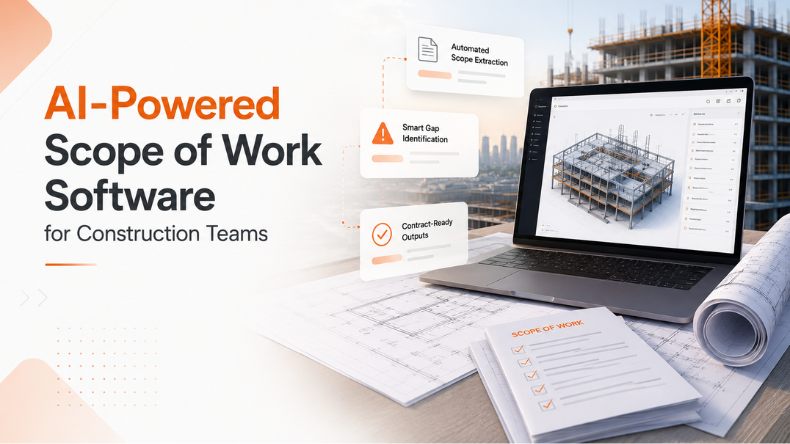
AI-powered scope of work software is changing how construction teams approach scope review. Instead of manually searching through drawings and specifications, emerging AI technologies are making it possible to find and organize scope information faster.
iFieldSmart.AI is being developed to help estimators and project teams explore new ways of generating scope directly from project documents while improving visibility across project information.
| Problem | AI-powered solution |
|---|---|
| Missed notes in drawings. | AI scans every sheet. |
| Scope confusion between disciplines. | AI detects overlaps. |
| Hidden coordination risks. | AI surfaces linked issues. |
| Unclear trade ownership. | AI maps scope responsibilities. |
| Scattered project data. | AI connects every file together. |
The system is developing specialized AI capabilities to support estimators, project leaders, and preconstruction teams in reviewing and managing project scope information.
Scope work eats up too much time. Drawings pile up fast. Notes sit everywhere. One missed line can turn into a real mess later. The upcoming AI capability is being designed to read project drawings, notes, and specifications to help organize scope information in one place. It helps organize scope information into one centralized view, reducing the time spent searching across project documents. Feels a bit like having another set of sharp eyes on the job.
Some drawings hide small details everywhere. A tiny callout. One buried schedule. A spec line nobody saw at first. The system is intended to review drawings, schedules, and specifications more efficiently than traditional manual workflows. It sorts scope by trade and system without the usual digging around. Teams spend less time hunting through pages and more time moving work forward.
Once the scope looks right, teams can export the file right away. Word, Excel, or PDF all work fine. No messy copy and paste. No long cleanup work late at night. Everything stays grouped and easy to follow. That alone saves a lot of stress when deadlines start getting close.
Explore these capabilities in detail in the following sections.
Most scope work still feels old school.
Teams open sheet after sheet. They scan notes. They cross-check specs. Then someone types the scope line by line into a Word file.
That process burns time.
One project may need teams to review hundreds of pages. Some specs cross 200 pages alone. Teams jump between architectural, MEP, plumbing, and structural sheets just to verify one item.
The bigger issue feels simple. Scope never sits in one place.
Part lives in drawings. Part lives in specs. Another note hides in an RFI. Then someone remembers a coordination detail from another sheet.
Manual review turns into mental overload.
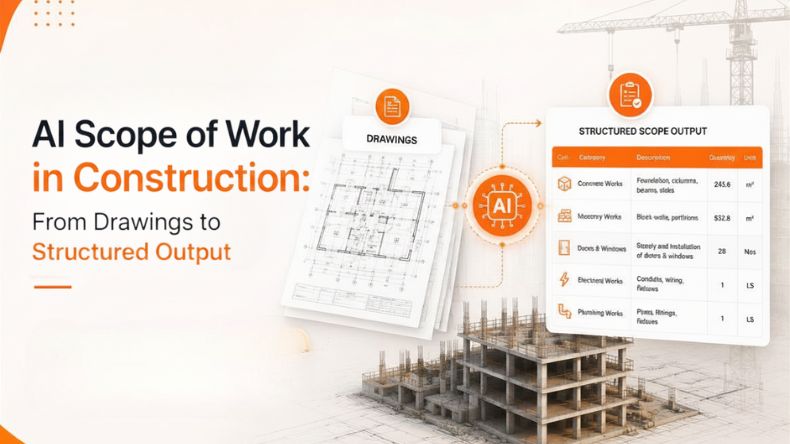
Emerging AI technologies are making it possible to review project files more efficiently by connecting information across drawings, specifications, and related project documents. Then it builds structured scope items from the actual documents. That saves time. But more than that, it reduces doubt.
Scope gaps rarely start in the field.
They start during the review.
Someone misses a note. One trade assumes another owns the work. A detail appears in drawings but not in specs. Everyone thinks somebody else checked it.
Then the issue shows up months later.
AI systems now flag those gaps early. The platform is being developed to help construction teams identify potential scope overlaps, coordination concerns, and ownership gaps across project documents.
That helps teams spot issues before contracts go out.
The software checks:
One missed coordination item can cost weeks later. Sometimes more.
That is why preconstruction teams now seek better scope visibility before they lock pricing.
Construction teams spend huge amounts of time searching documents.
Sometimes people spend half the meeting looking for one detail.
AI-powered scope tools change that pattern.
Instead of digging through PDFs, teams ask direct questions.
Questions like:
The vision is to allow users to ask project-specific questions and receive answers connected to relevant drawings and specifications.
That speed helps estimators. It helps PMs. It helps field teams, too.
One answer in seconds can keep meetings moving.
And honestly, that feels refreshing on busy projects.
Trade scope takes time because teams rewrite similar language again and again.
Electrical scope. Mechanical scope. Plumbing scope. Fire alarm scope.
The process repeats.
AI-powered software helps to build a structured trade scope directly from drawings and specs.
The system can pull:
Then it formats the scope into usable outputs.
That includes Word files and contract-ready Exhibit B documents.
Instead of typing the scope manually for hours, teams review and refine structured drafts.
That changes how preconstruction teams spend their day.
Less searching. Less typing. More checking.
Construction work breaks when teams operate in silos.
Electrical reviews one set. Mechanical checks another. Structural sits somewhere else.
Then coordination problems appear late.
Emerging AI technologies can connect project information across drawings, specifications, and coordination workflows. They scan relationships across trades instead of reviewing sheets one at a time.
That gives teams a fuller picture.
One note in a structural drawing may affect the electrical scope. A mechanical detail may need plumbing coordination. AI systems trace those links automatically.
That matters during:
Teams move faster when everyone sees the same information.
Rework usually starts with confusion.
Nobody feels fully sure who owns the work.
That uncertainty spreads across the project.
AI-powered scope intelligence has the potential to reduce some of that confusion.
Instead of vague assumptions, teams get traceable scope references.
That improves accountability.
It also helps during buyout and subcontract reviews. Teams can validate the scope before contracts move forward.
The software can help to identify:
Those checks reduce surprises later.
And construction teams already deal with enough surprises.
Estimators face constant pressure.
Bid deadlines feel tight. Drawings keep changing. The scope grows larger every year.
Manual review makes that harder.
AI-powered scope software will support estimators by scanning large drawing sets and returning structured findings.
That helps with:
The goal is not to replace estimators.
The goal is to help them focus on judgment instead of document hunting.
That difference feels important.
Good estimators already know construction deeply. AI just removes some of the slow workarounds.
Construction teams already have the data.
The problem lies in access.
Most project information stays buried across disconnected files. Teams spend hours trying to connect the dots manually.
New AI technologies are creating opportunities to treat project documents as connected sources of information rather than isolated files.
That changes how teams interact with projects.
AI Systems is designed to analyze drawings, specifications, RFIs, and submittals together to create more useful project intelligence. They organize the findings into structured outputs that the teams can actually use.
That includes:
The information already existed inside the project.
AI simply helps teams surface it faster and with more clarity.
Construction projects keep growing more complex.
Teams handle tighter schedules. Smaller margins. Larger document sets.
Old workflows struggle under that pressure.
AI-powered scope of work software helps construction teams work with more speed and clarity. It connects scattered project files. It finds missing scope. It builds structured outputs. It supports better coordination across trades.
That shift already started across preconstruction workflows.
Platforms like iFieldSmart AI now help teams move from manual document review toward connected construction intelligence.
And maybe that becomes the biggest change of all.
Teams stop hunting for information.
They start working with it.
Construction teams cannot afford slow scope review anymore.
Projects move fast. Drawing sets grow larger. Coordination keeps getting harder. Manual review methods now miss too much and waste too many hours.
AI-powered scope of work software gives teams a better way to handle that pressure. It helps estimators find answers faster. It helps PMs spot gaps early. It helps trades work from the same information instead of scattered files and assumptions.
That changes daily work in a real way.
Teams spend less time searching PDFs. Less time debating ownership. Less time fixing missed scope later in the field.
Platforms like iFieldSmart AI are being developed to help construction teams connect drawings, specs, RFIs, and trade scopes into one usable workflow. The software scans project files, finds missing details, links scope items, and gives teams clearer direction before work starts.
And honestly, that might be the biggest value here.
A better scope review does not just save time. It helps teams avoid confusion before confusion turns expensive.
Construction teams still need experience. They still need judgment. AI simply helps them move faster with fewer blind spots.
That balance feels practical.
And for many teams, it already feels overdue.
Explore more insights on similar topics
 SCOPE MANAGEMENT
TL;DR Why Structured Scope Intelligence Is Becoming Essential in Construction Structured scope intelligence is transforming...
 SCOPE MANAGEMENT
In most construction projects, scope gaps don’t start on-site; they start in the documents. Drawings,...
 SCOPE MANAGEMENT
You’re deep into bid review. Drawings are open across multiple screens. Specifications sit in another...